
Everything is transformed by winter. The atmosphere is more humid, evenings are longer, and in the case of the parents of a newborn baby, every single breeze is asking a silent question: Is my baby warm enough? Knowing how to keep the newborn warm during winter is not a question of fear but rather the understanding of grace, balance, and tender treatment.
Infants do not feel the winter in the same way as adults do. Their bodies have not yet been trained on how to control the temperature, and their skin is very sensitive, so even the slightest temperature changes can result in their discomfort. This is the reason why learning how to keep newborns warm during winter is amongst the most significant skills new parents can acquire during the colder months.
This all-inclusive guide on how to keep newborns warm in winter, with step-by-step instructions, including clothes, sleep, indoor, outdoor safety, and the most popular mistakes, so that you should be able to keep your baby safe, calm, and comfortable during winter.
Why Newborns Feel Cold More Easily in Winter
This part outlines the biological and physiological causes that make newborns unable to preserve heat and the need to provide special care in winter.
Infants are not miniature adults. They have different body functions, particularly in temperature regulation. Parents have to know how to keep newborns warm in winter, and to do this well, they must know why babies lose heat so fast.
Newborns have:
- They require less body fat to insulate them.
- An increased body surface area as compared to weight.
- The lack of developed temperature control systems.
This implies that they lose heat easily, particularly in cold weather. Although adults might experience a slight cold, a newborn baby might experience an unpleasant cold. This is the reason why pediatric specialists attach importance to taking care of babies during winter and why it is important to learn how to keep newborns warm during winter.
Being able to keep a newborn warm is not about piling up the number of layers but rather keeping the warmth straight and even until it reaches what is a constant and continuous warmth that is comparable to the warmth of the womb.
Signs Your Newborn May Be Too Cold
This part brings out practical indicators that can be noted by parents in order to determine whether their baby is in need of more warmth.
Parents who are not sure how to keep their newborn warm during the winter should be informed of how to care for the baby before they learn the ways of doing it. Babies are unable to talk, but their body speaks volumes.
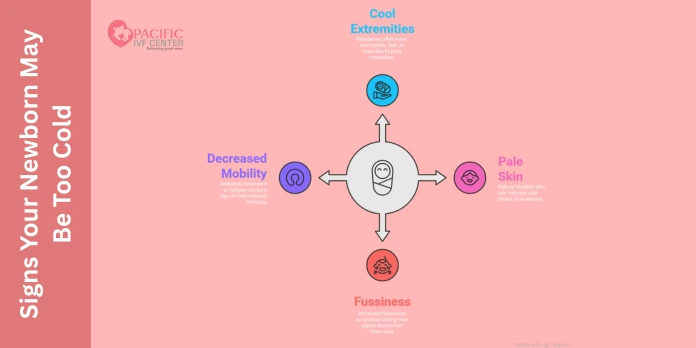
The generic symptoms of coldness in a newborn infant include:
- Cool hands, feet, or nose
- Pale or mottled skin
- Fussiness or unusual crying
- Decreased mobility or fatigue.
You should examine the back or chest of your baby, and not the hands. Extremities may be cool whilst the baby is satisfactorily warm. Being aware of these signs will enable the parents to make appropriate changes to the clothing and the environment so that the newborn will not be too hot or too cold in winter.
You can also read about: https://pacificivf.com.np/egg-donation-success-rates-nepal/
How to Keep Newborn Warm in Winter Indoors
This part is aimed at the development of a cozy and secure indoor world where the babies spend the majority of their time.
The basis to keep newborn warm during winter is indoor care. Because infants spend the majority of their initial few weeks indoors, it is necessary to regulate the temperature indoors and the clothing used.
The optimal room temperature for a newborn is usually 20-22degC (68-72degF). Preservation of this range is useful in regulating newborns by keeping them warm without overheating them.
Ways to manage indoor warmth:
- Use a room thermometer
- Keep the baby out of the drafts or windows.
- Wear the baby at the correct time.
The relaxing atmosphere of a warm room blended with the silence of a warm rhythm allows your baby to sleep safely, feed during his or her comfort, and grow safely throughout the winter.
Dressing Your Newborn Properly in Winter
The section describes clothing strategies and techniques of layering that are used to control the body temperature of newborns.
The use of clothing is a key aspect in regards to keep newborn warm during winter. The overall principle is easy: when a baby is dressed, they should have one more layer than an adult in the same conditions.
Winter clothes should also contain:
- Base layers of soft cotton bodysuits.
- Footed pajamas or warm sleepers.
- Sweaters or cardigans that are lightweight.
- Wearing hats indoors to case of heat loss.
Do not use heavy clothes that are moisture-retaining. Breathable layers will provide an opportunity to easily regulate the clothing, as well as to keep the newborn warm without any inconvenience. Dressing is also one of the most secure and easiest methods to keep a newborn warm during winter.
How to Keep Newborn Warm in Winter During Sleep
This area describes the safe sleep habits and, at the same time, staying warm on cold nights.
Parents are most concerned with warmth when they are sleeping. Knowing how to keep a newborn warm in winter when it is sleeping implies a question of comfort over safety.
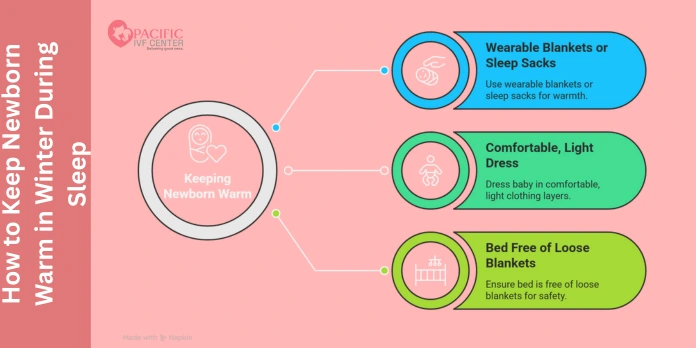
Recommended and safe methods of ensuring that the newborn is not exposed during sleep:
- Wearable blankets or sleep sacks.
- Put clothes on the baby in a comfortable, light dress.
- Bed Free of loose blankets.
Blankets should not be used loosely, and they are dangerous in terms of suffocation. A properly fitting sleep sack provides even distribution of body heat and will allow the newborn to be kept warm during winter without endangering them.
During the night, warmth must be of a uniform and light nature, and it must never be heavy and stuffy.
How to Keep Newborn Warm in Winter While Bathing
This part is concerned with ensuring that, before, during, and after bath time, it stays warm.
Planning bath time in winter is important. Wet babies lose heat easily, and it is necessary to know how to keep newborn warm in winter when taking a bath.
Key tips:
- Warm the room before bathing
- Use warm (not hot) water
- Wipe off the baby and dry him off.
- Changing the baby immediately after taking a bath.
When bathing your baby, wrapping him in a warm towel will keep him warm and eliminate incidents of sudden change in temperature. The process of bathing must be pleasant, not frightening.
How to Keep Newborn Warm in Winter Outdoors
This section gives instructions on safe outdoor activities and precautions in cold weather.
Even in winter, fresh air is good, but not when done carelessly. The skills for keeping newborns warm in winter outside in the open air have to be prepared.
Outdoor essentials include:
- Warm layered clothing
- Hats, mittens, and booties
- The use of stroller covers as wind protection.
Do not leave the baby unattended in cold weather, and frequently check the baby. Sometimes it is good to take short walks; however, care must be taken to ensure that the newborn is not exposed to cold in the winter without exposing it to cold stress.
The Role of Skin-to-Skin Contact in Winter
This part emphasizes the natural warmth and emotional gain of skin-to-skin contact.
Skin-to-skin contact is one of the most natural methods of keeping the newborn warm. The regulation of the temperature of the baby is an inherent process of the body of the parent.
Benefits include:
- Improved warmth
- Emotional bonding
- Better feeding regulation
During winter, skin-to-skin contact is even stronger as a kind of blanket of nature, and it acts as a reminder of how natural it is to learn how to keep newborn warm during winter.
Common Mistakes Parents Make When Keeping Newborns Warm
This part warns against overwarming and dangerous practices.
While learning how to keep a newborn warm in winter, parents can sometimes overdo it.
Common Mistakes:
- Over-layering
- Heavy blankets
- Heating rooms
Excess heat worsens both discomfort and danger. The idea is to achieve a balance, which involves warmth but not excessive heat. The difference between the two concepts will benefit parents in keeping an infant warm during winter safely.
How to Keep Newborn Warm in Winter Without Overheating
This topic will be covered in this section.
Warmth should never choke. To keep a newborn warm during winter, parents have to allow a good flow of air.
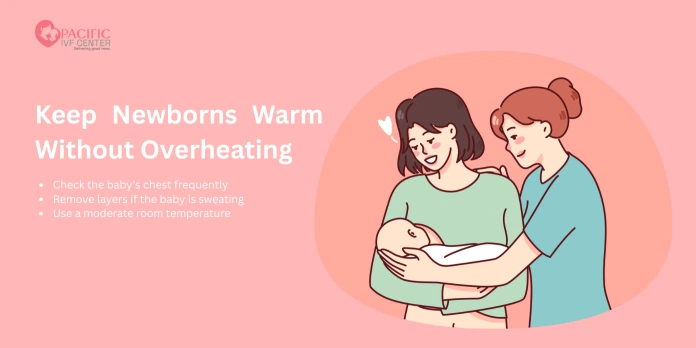
Best practices:
- Check the baby’s chest frequently
- Remove layers if the baby is sweating
- Use a moderate room temperature
Warmth is a function of comfort, not over-insulation.
You might also be interested in: https://pacificivf.com.np/ivf-twin-rate-2025/
When to Call a Doctor About Cold Stress
To clarify when professional assistance is needed in this area, this section will describe that
Although all advice is given to keep a baby warm, sometimes medical advice is necessary.
Seek help if:
- Baby feels abnormally cold
- Skin turns pale or blue
- The baby is very sleepy or unresponsive
Taking immediate action will make sure your child remains protected during the winter season.
A Gentle Winter Reminder for New Parents
This part ends this guide with emotional assurance and confidence-building.
Winter parenting is not all about achieving perfection. Winter parenting is all about focus, patience, and learning with each passing day. As you learn to keep a newborn warm in the middle of winter, remember that small steps go a long way in making a difference.
Then there will be nights when the heater will hum in the background, when you will be bundled up in blankets in the morning, and when your child will sleep soundly in your arms, warm and safe in a world where they are oblivious to the cold. Those are the moments when you will know you are doing enough.
Following these guidelines will enable you to keep your child warm in winter and allow them to have a good start in life.
FAQs:
1) What is the 5 5 5 rule for newborns?
The 5 5 5 is a parenting rule that enables one to learn about safe outdoor exposure to babies. It is necessary to learn how to keep newborn warm in winter with the help of this rule, and the professionals of Pacific IVF also suggest it be combined with attentive consideration given to the number of clothes. Following this rule, the parents need to keep their baby warm and can refer to the Pacific IVF guides.
2) How cold can newborn babies tolerate?
Babies are sensitive, and thus it is important to know how to keep newborns warm in winter. Pediatric directions and Pacific IVF allege that infants can withstand slightly cold temperatures through correct laminating. Pacific IVF specialists recommend that you carry out regular checks on your baby to check the safety of his skin and extremities.
3) What is the 3 6 9 rule for babies?
The 3 6 9 rule helps parents to understand the time a newborn baby can spend in cold weather. This rule also assists in the process of keeping a newborn baby warm during winter, as suggested by medical professionals and Pacific IVF. The parents can use the knowledge gained from the Pacific IVF in order to safely engage in short durations of outdoor activities without the danger of hypothermia.
4) How to tell if a newborn is too cold?
It is important to know cold stress signs in order to know how to keep a newborn warm during winter. When the baby has cold hands, feet, or body, it needs to be warmed up, which is advised by Pacific IVF. The professionals at Pacific IVF recommend that you watch the color, alertness, and comfort of your baby in order to avoid keeping them in cold environments.
