
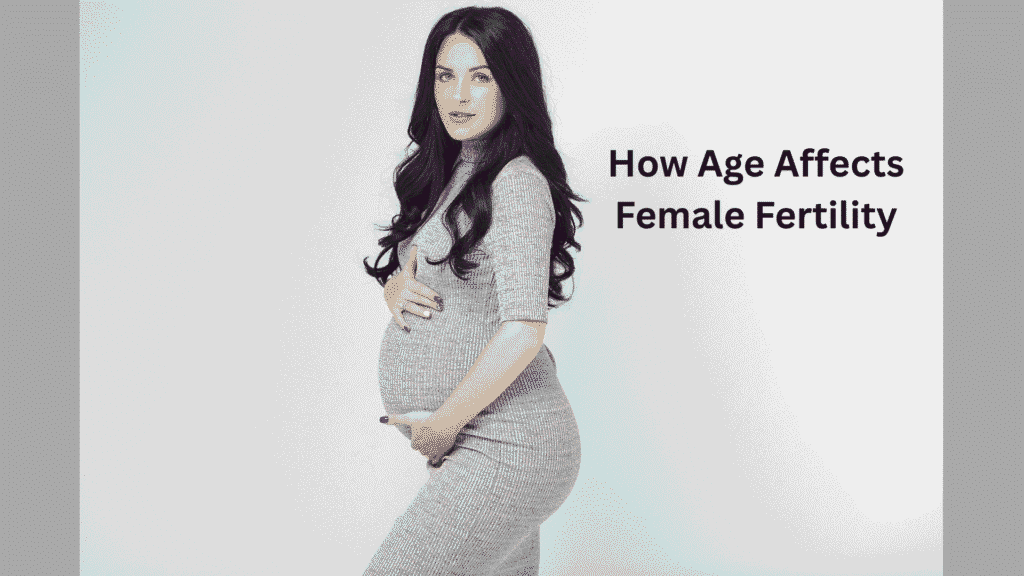
Fertility is a woman’s power, sacred and pure so much so, the existence of mankind is dependent on it. Every women is born with a number of eggs that diminish over the years. A young girl begins her fertile journey with the onset of first menstrual cycle and around the age of 20-25 which is peak fertility, she releases her healthiest eggs.
This is where the factor of age comes to play, especially because surpassing age 25 signifies that poor quality eggs start getting released. A natural obstacle couples usually face! Today in this article, we will be talking about why age is a crucial factor in determining female fertility.
Learning about Fertility: How Is Age A Crucial Aspect

Fertility is a complex of many factors hormonal balance, lifestyle, genetic, and health problems, and age is one of the most characteristic parameters. The fertility of a woman goes through natural changes when she is puberty to the menopausal stage. Although the modern medicine has opened new avenues such as IVF and egg freezing, biology continues to be huge.
Age 20s : The Fertile Prime
It is biologically the fertile age when a female is in their 20s. Here’s why:
You start with approximately 1 million-2 million and by puberty she is already at approximately 300,000-400,000 count. Undoubtedly, during your 20s, the quality of your eggs is on its best. Most hormones such as estrogen and progesterone operate like a clock such that it is easy to predict ovulation.
There is, however, a catch. Although age is the most favorable period, physically, not all women in their 20s are competent to have a family due to their lack of emotional, financial, and professional preparedness. Moreover, sexually transmitted diseases (STDs) and other lifestyle behaviors such as smoking or abnormal menstrual periods may begin to interfere with the fertility process, with few noticeable indicators.
Age 30s: You Are Fertile And The Clock Is Getting Louder
The late 20s are not yet a pool time to conceive but the downward trend starts. The quantity of the egg and egg quality begin to decline around the age of 32. As discussed earlier, this period still have fairly greater chances of conceiving compared to the later days of 40 years and above.
This effect is more accentuated after the age of 35. There is a slight and steady increase in the risk of miscarriages or chromosomal problems.
To Better Your Chances Of Fertility, Here’s What You Can Do:
- Consider a fertility checkup in case you are going to wait.
- For those that are not going to have children soon, consider egg-freezing in your early 30s.
- Live a healthy lifestyle to aid the balance of the hormones.
In your 30s the main thing is consciousness. Of the women who become pregnant in this age range, many do so without any treatment of any kind, however, by one year (or 6 months at age 35). This is long enough to go childless and it is time to visit a specialist in fertility therapy.
Fertility Decline By Age 40 : How Age Affects Female Fertility
At 40, age starts to show its effects on fertility very strongly. More than 97 percent of the original eggs have been reduced by most women. The quality of the eggs reduces drastically and there are increased chances of having chromosomal problems. Natural conception decreases by 50% per cycle. The chance of miscarriage may go up to 40 percent at the age of 43.
However, this isn’t a full stop point to fertility yet! A good number of women in their early 40s do conceive-with or without assistance. Such technology has enabled women later in life to become mothers through assisted reproductive technologies such as IVF, application of donor eggs, or embryo adoption.
It might be more stressing emotionally and physically and there are higher risks of pregnancy yet it is worth it to many.
The Importance Of Male Age In Fertility: Mostly Empowered
Although this guide is directed at women, it needs to be mentioned that male fertility also decreases a bit more slowly. Beyond the age of 40, sperm quality decreases affecting the ability to conceive, as well as risk of genetic disease.
When To Seek Help: Listen To Your Body And The Calendar
This is an overall guide to amplify overall fertility during various ages:
- During your 20s and in your early 30s: Give natural attempts 1 year before getting assistance.
- Between 35 and 39: Wait not more than 6 months of trying.
- After the age of 40 or more: It may be useful to seek the advice of a specialist at once.
Conclusion
The experiences of each woman are different. Fertility is not only clock ticking but also timing, mindset, support and alternatives. Although age is a part of female fertility, it does not determine the value of you, what kind of woman you are or whether you will have a future.
When you have proper knowledge and get assistance at the right time, you can make decisions that work with your life- not on the schedule of someone else.
Fertility awareness is not reserved only to women who are interested in having babies at this time. It is self-respect of sorts. When you know more about your body, the better you can plan your life on your terms. We are now hopeful you are clear about how age affects female fertility.
