
Primarily, the initial few days of a newborn are silent, delicate, and full of inquiries. The room is cool, and the baby has fallen asleep, and there comes the sudden thought that comes to my mind, it is Is my baby warm enough? The problem of keeping newborn warm at night is one of the most common ones that new parents have, and it is rather natural that this issue should be considered particularly during the first weeks when all things are new and vulnerable.
Infants are not able to adjust their body temperatures like adults. This renders nighttime warmth, not only for comfort, but also for safety. Simultaneously, excessive indulgence in it is equally dangerous as insufficient performance. This Pacific IVF guide takes you through all you need to know in an easy, straightforward format and without fear, confusion, or unsafe practices.
Why It’s Important to Know How to Keep Newborn Warm at Night
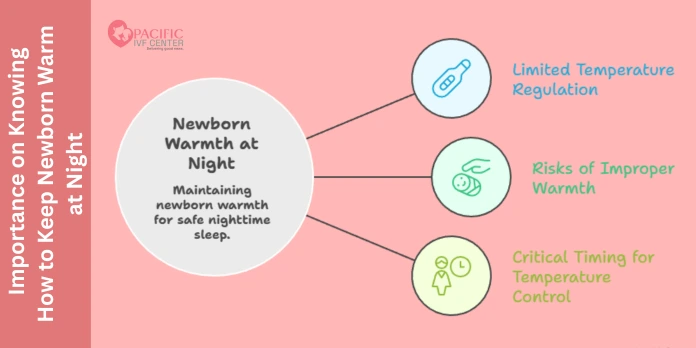
How to keep newborn warm at night is not a matter of covering the baby with more layers, but rather, it is the knowledge of the body, boundaries, and requirements of a newborn. Becoming familiar with how to keep the baby warm at night enables the parents to avoid stresses caused by cold and overheating at the same time as they are also detrimental to the baby.
Babies dissipate heat more quickly than adults and particularly the head, skin, and extremities of the babies. Their nervous system is yet to develop fully, and so they cannot adapt to the changes in temperature in the environment. This renders night deliberately attended care not optional.
Newborns’ Limited Ability to Regulate Body Temperature
Infants are born with incomplete thermoregulation mechanisms. They depend on their care providers and the surroundings to keep their body temperature constant, especially when they are asleep.
Risks of Improper Nighttime Warmth
- Cold stress is capable of raising the use of energy and disrupting sleep.
- Excessive heating may cause nighttime complications.
- Changes in temperature can be a cause of restlessness and frequent awakening.
When Temperature Control Matters the Most
The period of the first 28 days of life is the most sensitive. At this moment, the correct method to keep newborn warm at night is very important for safe sleep and general well-being.
Ideal Room Temperature for Newborn Sleep
This room does half of the task in assisting parents to keep newborn warm at night. The sleep environment can be regulated to provide consistent warmth at no risk, as opposed to concentrating on clothes alone.
It is aimed at a room that will be comfortably cool to an adult in light clothes. Under stable conditions, the number of layers reduces, and the danger of overheating is considerably reduced.
Recommended Temperature Range for Newborns
The majority of child specialists suggest a room temperature that is neither chilly nor stuffy. A harmonious environment helps in profound sleep.
How Room Temperature Affects Sleep Quality
An excessively cold room may result in frequent waking, whereas an excessively warm room may result in sweating, irritability, and discomfort. The first step, which should be followed by parents who learn to keep newborn warm at night, is always the room and not the wardrobe.
Signs the Room Is Too Cold or Too Warm
- Too cold: constant agitation, cold chest or neck.
- Too hot: perspiration, red-flushed skin, rapid breathing.
How to Keep Newborn Warm at Night Without Blankets (Safest Methods)
This is the point at which a lot of parents get lost. Blankets are natural, but they cannot be used for the newborn’s sleep. Fortunately, there are many safer and more efficient methods of keeping the baby warm throughout the night without posing any dangerous consequences.
The section describes evidence-based practices, which are practical and recommended by newborn care experts at Pacific IVF.
Dressing Newborns in the Right Sleepwear
When it is properly selected, clothing is the safest source of warmth.
Best practices include:
- A step further than an adult would dress up in the same room.
- Full-length breathable cotton sleepwear.
- Do not use tight or restrictive clothes.
The idea is to retain warmth on the infant, rather than wrap him or her.
Using Sleep Sacks or Wearable Blankets
Sleep sacks do not have loose fits and are always warm.
Benefits include:
- Evening temperature all night long.
- No risk of covering the face
- Liberty to walk around and be warm.
One of the safest tools that may be used to keep newborn warm during the night is sleep sacks.
Swaddling to Warmth and Comfort (When It is safe).
Swaddling may also help give warmth and comfort to new babies who have not yet started rolling.
Important guidelines:
- Swaddle loosely and not tightly.
- Leave room for hip movement
- Cease swaddling after the stages of rolling.
Swaddling ought to be more of an embrace, but not a tie-up.
How to Tell If Your Newborn Is Cold or Comfortable at Night
Hands and feet are checked by parents frequently, and they are not considered good predictors. Knowledge about the appropriate signs will decrease the feeling of anxiety and avoid redundant overlay.
It is also important to know how to determine the level of comfort in knowing how to keep newborn warm at night.
Where to Check Newborn Body Temperature
The best areas to check are:
- The back of the neck
- The chest or upper back
These regions indicate the temperature of the heart.
Common Myths About Cold Hands and Feet
The cold hands and feet are normal because of the development of circulation. They do not necessarily imply that your baby is cold.
Physiological Indications of Uncomfort.
- Persistent crying
- Difficulty settling
- Short, restless sleep cycles
Relaxing babies sleep at ease, and their breathing is regular.
Common Mistakes Parents Make When Trying to Keep Newborn Warm at Night
Well-meaning action can result in unsafe practices. Knowing the most frequent errors will help parents to eliminate the needless risks and attempt to keep newborn warm.
This knowledge is an essential component of training on how to keep newborn warm during the night.
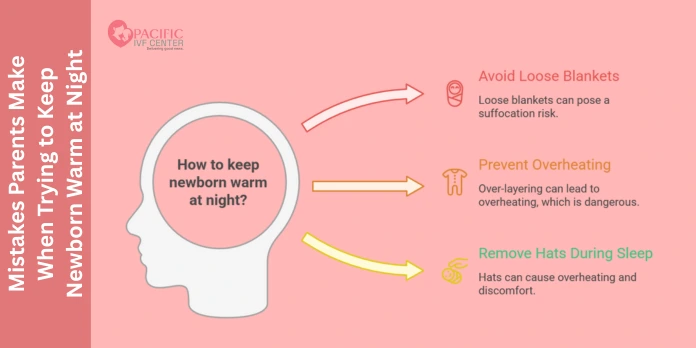
Using Loose Blankets or Quilts
Bedding must not be loose because it is prone to suffocation.
Over-Layering and Overheating
The excessive layers can entrap the heat and lead to overheating, which is more harmful than a slight chill.
Wearing Hats during sleep
Hats do not allow the release of heat and can be worn only when it is outside or in the first hour after birth.
How to Keep Newborn Warm at Night During Winter
Winter is also another problem, particularly in colder climates or in homes that are not very well-insulated. Nevertheless, safe warmth can still be obtained without being unsafe in terms of sleep.
This part is dedicated to winter-related practices to keep newborn at night.
Making Clothing Adjustments to Avoid Heating Equipment
Clothing is not as dangerous as direct heat sources.
Safe Use of Heaters and Avoiding Drafts
- Keep heaters away from cribs
- Avoid direct airflow
- Keep the room temperature constant.
Extra Winter Precautions for Nepal’s Climate
During the cold season, Pacific IVF recommends concentrating on the quality of the sleepwear and insulating the rooms instead of wearing many layers.
Safe Sleep Guidelines Every Parent Should Follow
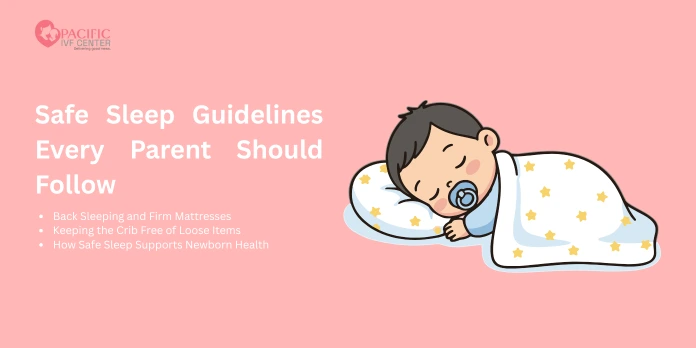
Safe sleep is not to be compromised with warmth. These guidelines ensure the protection of newborns, and yet the security to keep newborn warm for the parents.
Safe sleep is part of the Pacific IVF postnatal teachings.
Back Sleeping and Firm Mattresses
It is advisable to always put newborns on their backs on a firm surface.
Keeping the Crib Free of Loose Items
No bumpers, blankets, toys, or pillows.
How Safe Sleep Supports Newborn Health
Safe sleep minimizes dangers and enhances extended and healthier sleep patterns.
When to Consult a Doctor About Newborn Temperature Issues
In other cases, warmth is an indicator of a problem. It is not only important to know how to keep newborn warm during the night, but it is also important to know when to consult a doctor.
Pacific IVF makes parents believe in their intuition.
Warning Signs That Need Medical Attention
- Continuous coldness despite the use of warmth.
- Lethargy or poor feeding
- Unusual breathing patterns
How Pacific IVF Supports Newborn and Postnatal Care
Pacific IVF will help parents feel not left alone in the process of providing care to young babies with the assistance of skilled pediatrics.
Conclusion
The ability to know how to keep newborn warm at night is not about perfection. It is concerning presence, consciousness, and equilibrium. With the room quiet, the right layers, and the sleep area secure, warmth comes as an automatic phenomenon.
During these night hours of the smaller world, made softer love in action is already in deed, trust it. And when doubts come, Pacific IVF will be available to provide direction to the families in a clear, caring, and confident manner.
FAQs:
1) How to keep a newborn warm while sleeping?
In order to know how to keep newborn warm at night, it is important to begin with the sleeping clothes that should be layered and a safe sleep sack. This is a recommendation that Pacific IVF suggests considering: monitor the room temperature and do not use loose blankets. By following the tips of the experts of Pacific IVF, the parents will make sure that their baby is sleeping safely and warm at night.
2) What happens if a newborn is too cold at night?
In case a new baby is too cold, the baby will develop stress, sleeplessness, or lack of energy, and the question of how to keep newborn warm at night is critical. Pacific IVF recommends checking the warmth of chest and neck. This helps avoid health complications and maintains the comfort of your baby after the advice of Pacific IVF.
3) What is the 5 3 3 rule for baby sleep?
The 5-3-3 rule is useful to make the parents arrange feeding and sleep and provide what to do to keep newbrorn warm at night. Pacific IVF focuses on the use of these routines together with the right layers and sleep sacks. Babies are kept warm and have a consistent sleep pattern by adhering to the strategy of Pacific IVF.
4) to tell if a newborn is warm enough at night?
One way to keep newborn warm at night is to check the chest or back, and find the baby breathing slowly, and this is a way of telling whether they are warm enough or not. Pacific IVF suggests that blanket should not be used carelessly and sweating should be monitored. All you need to do is follow the tips of Pacific IVF to make sure that your baby is warm all night.
