
Itchy breast is not a new thing, something that most women surely experience once during their lives. Breast itching in most situations is not harmful and is associated with skin irritation, hormonal variations, or environmental factors. However, since the breast is a sensitive and vital organ of the body, itching may at times get one anxious and make concern about breast cancer.
The good news is that most causes of itchy breasts are not serious; however, knowing the causes and the time you need to consult a doctor can keep you up to date and assured about the condition of your breasts.
Can Itching Be a Sign of Breast Cancer?
It is a very significant question, and people usually ask it.
Itching alone is rarely a sign of breast cancer. Most breast cancers do not cause itching as an early symptom. In most cases, breast itching is linked to skin-related issues rather than problems in the breast tissue.
What Does an Itchy Breast Mean?
In most cases, an itchy breast means the skin on or around the breast is irritated. Breast skin is sensitive and can react easily to dryness, sweat, friction, or products applied to the skin.
Occasional itching that goes away on its own is usually not a cause for concern. However, chronic or repeated itching can signal some internal skin condition or infection requiring treatment.
Common Causes of Itchy Breast
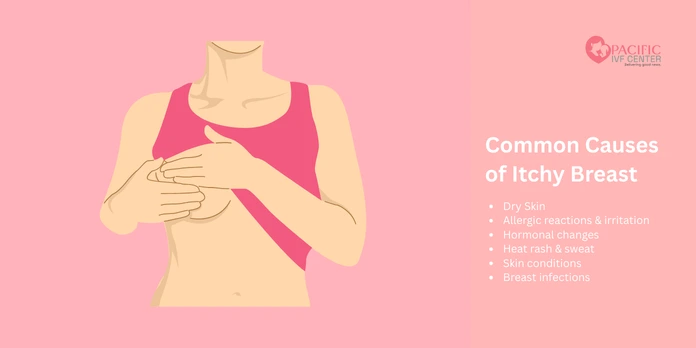
Itchy breast symptoms are usually a result of skin-related or hormonal issues, and not necessarily a problem with the breast tissue. The skin around and on the breasts is very sensitive and can easily get irritated by dryness, friction, sweating, or hormonal changes. By understanding these common causes, it is easier to determine why itching is happening and when simple remedies are sufficient.
1. Dry Skin
Cold or dry climatic conditions can cause the skin to lose its natural moisture, leading to a tight, flaky, and itchy breast area. Taking too many hot showers or bathing too frequently can make dry skin worse by removing moisture from the skin’s surface. Using harsh soaps or cleansers on dry skin can be irritating, but the condition can be relieved by frequent moisturizing.
2. Allergic Reactions & Irritation
Tight or synthetic bras can trap heat and rub against the skin, leading to irritation and itching. Laundry detergents, fabric softeners, perfumes, lotions, and body sprays may trigger allergic reactions on sensitive breast skin. Friction from ill-fitting clothing or physical activity can also cause redness, itching, or a mild rash, especially with repeated exposure.
3. Hormonal Changes
There are hormonal changes that occur during the menstrual cycle, pregnancy, or breastfeeding, which can increase the flow of blood to the breasts, resulting in more sensitive skin that itches. Hormonal changes can also cause itching without the presence of any rashes or other skin manifestations. This is temporary and resolves as the hormonal levels normalize.
4. Heat Rash & Sweat
Sweat can also cause itching under the breasts, especially during hot and humid weather. This is because sweat can become trapped under the breasts. This is also caused by the inability of the breasts to breathe due to tight clothing. This can be prevented by keeping the area well ventilated.
5. Skin Conditions
Skin conditions such as eczema can cause dry, inflamed, and intensely itchy patches on the breast area. Psoriasis may lead to thick, scaly skin with persistent itching, while contact dermatitis occurs due to allergic reactions to products or fabrics. These conditions usually cause visible skin changes along with itching and may require targeted treatment.
6. Breast Infections
Breast infections can cause itching in addition to other symptoms. Mastitis, a breast infection that mostly affects breastfeeding women, can cause symptoms such as pain, redness, swelling, and fever in addition to itching.
Infections require medical treatment since they will not go away on their own and can worsen if not treated appropriately.
Warning Signs You Should Not Ignore
Although the majority of cases of itchy breasts are harmless, some signs that accompany itching could be indicative of a condition that needs medical attention. It is important to seek medical attention if the itching is accompanied by the following signs:
1. Itching That Lasts for Several Weeks
It is normal to experience some itching regularly, but if the itching continues for several weeks despite the application of the above-mentioned self-care measures, the condition could be a sign of a skin condition or infection that needs medical attention.
2. Itching in Only One Breast
Itching affecting only one breast is more concerning than itching in both breasts. This may point to a localized skin problem or, in rare cases, an underlying breast condition that requires further examination.
3. Redness, Swelling, or Thickened Skin
Redness, swelling, or skin that feels thickened or warm can indicate inflammation or infection. The same changes can also be observed in rare cases of the breast, and thus, medical evaluation is relevant when the same changes are persistent.
4. Nipple Discharge, Crusting, or Bleeding
Any abnormal discharge, crusting, or bleeding of the nipple cannot be overlooked. These symptoms can be related to infections, skin disease, or, in the case of the rarely encountered, more serious breast diseases.
5. A New Lump or Noticeable Change in Breast Size or Shape
Any new lump or observable alteration in the size or shape of the breast should always be observed by a doctor. Although most of the lumps in the breast are benign, they should be properly assessed to exclude serious causes, and early treatment should be provided if needed.
The symptoms do not necessarily indicate that an individual has cancer, but it is important to ensure that one is examined by a healthcare professional as early as possible to be accurately diagnosed and relax.
When to See a Doctor
Mild breast itch does not always need medical intervention, but in certain cases, medical attention is needed. Early consultation with a doctor may aid in the detection of the underlying cause and prevent the worsening of the symptoms.
1. Itching Does Not Improve With Home Care
When itching does not stop even with the use of moisturizers, avoidance of irritants, and keeping the area clean, then it can be a sign that the skin has some form of condition or infection, which requires medical attention. Persistent symptoms should not be ignored.
2. Symptoms Keep Returning
The recurrence of itching can be an indication of a problem that includes allergies, eczema, or hormonal disorders. A doctor is able to assist in identifying the trigger and prescribe long-term care.
3. Itching Is Associated With Visible Breast Changes
Itching accompanied by redness, swelling, skin thickening, nipple changes, or discharge should be evaluated promptly. These signs may indicate infection or other breast conditions that require further testing.
4. You Experience Fever or Pain While Breastfeeding
During the breastfeeding process, fever, pain, and warmth or swelling may indicate mastitis or another infection in the breast. Medical treatment should also be taken early to relieve symptoms and complications.
Early diagnosis helps to find the cause and treat it properly, providing relief and ensuring peace of mind.
Conclusion
An itchy breast is not dangerous and is usually due to irritation of the skin, a change of hormones, or the environment. Although the fears about breast cancer are quite reasonable, itching itself is hardly an indicator of a severe diagnosis.
Listening to your nagging symptoms, keeping your skin clean, and consulting a doctor when necessary will help keep your breasts healthy and give you the benefit of peace of mind.
