
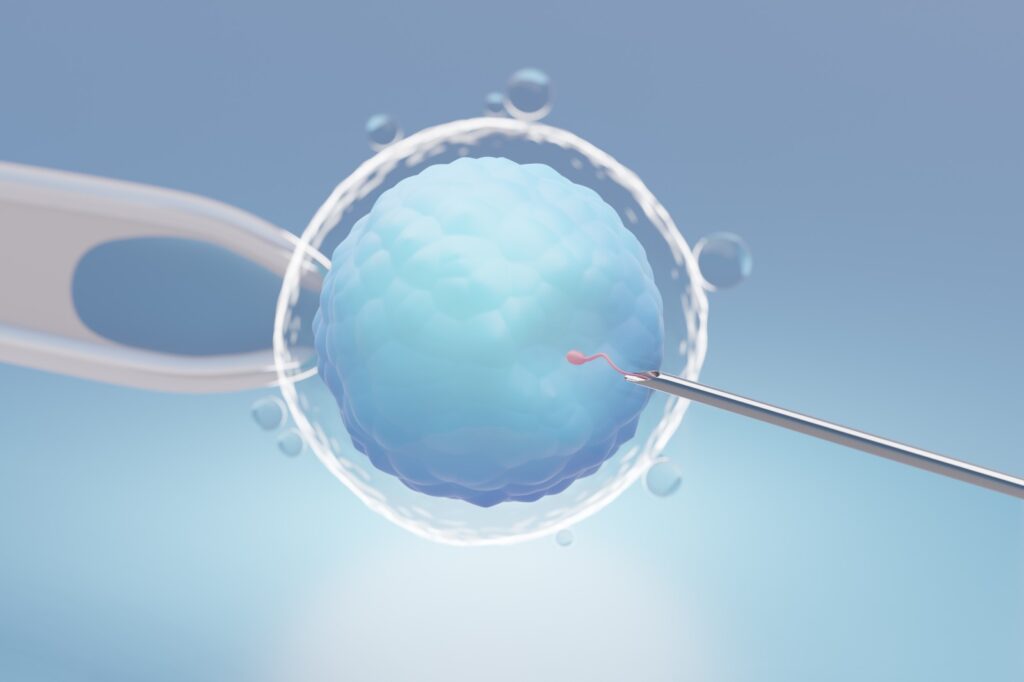
Majority of the couples in the world grapple with the issue of infertility. In Vitro Fertilization (IVF) is the choice of treatment to many. However, the conventional IVF may be exhausting, physically and financially. And this is where the Mini IVF, otherwise known as Minimal Stimulation IVF or Gentle IVF comes into play. It provides an alternative which is less stern and requires less, and which concentrates on quality rather than quantity.
What Is Mini IVF?

Mini IVF basically involves the same procedure as IVF but has one significant difference which can be seen in terms of the use of fertility medication. Rather than provide heavy stimulation to the ovaries to generate numerous eggs, Mini IVF involves low doses of medication, whereby it can also yield only a few eggs being retrieved.
After being retrieved, such eggs are fertilized in a lab and one or two of the embryos are put back to the uterus. The treatment also causes a decreased burden to the body by using less medication but offers a viable opportunity of conceiving.
Who Is Mini IVF Best Suited For?
Mini IVF is a good option for women not likely to get good results with high doses fertility medications. For example, women with poor ovarian reserve and women aged after 35. Patients with a risk of Ovarian Hyperstimulation Syndrome (OHSS) or those couples that prefer less aggressive fertility treatment also have a choice as well.
Mini IVF can be attractive in other instances to individuals who want to reduce the cost. This is also applicable for ones interested in avoiding the physical side effects of conventional IVF. Doctors might however prescribe the traditional approach to patients whose cases are severe in terms of infertility.
A Dive Into The Advantages Of Mini IVF
The greatest benefit of Mini IVF is that it is milder to the body. Women also tend to have less bloating, discomfort, and mood swings than with the more drugs used. The reduced dosage of medication also implies lower expenditure in comparison with the common IVF.
The other advantage is that Mini IVF targets generating fewer, yet, possibly, healthier eggs. This quality based procedure can be particularly useful in older women where chances of obtaining a large number of viable eggs are not good already.
Disadvantages Of Mini IVF Revealed
The Mini IVF is attractive but it has trade-offs. There is less to select (embryos) to transfer or freeze due to the reduced number of eggs harvested. This at times implies an adequate number of repetitions are required to attain success.
The second clear drawback is that mini IVF often doesn’t conclude in surplus embryos for cryopreservation. This mean couples cannot store embryos intended towards future applicability.
Regular IVF is the best option when treating couples who have extreme infertility issues.
Mini IVF VS Regular IVF : Differential Factors
| Factor | Mini IVF | Regular IVF |
| Medication Use | Low doses, fewer injections | High doses, multiple injections |
| Eggs Retrieved | Usually 3–6 eggs | Typically 10–20 eggs |
| Focus | Egg quality | Egg quantity |
| Side Effects | Minimal, milder | Higher chance of side effects, risk of OHSS |
| Cost | 30–50% cheaper than regular IVF | More expensive than Mini IVF |
| Treatment Intensity | Gentler, less stressful | More aggressive, demanding |
| Best Suited For | Women seeking a natural, affordable approach or those with low ovarian reserve | Women needing maximum eggs, genetic testing, or higher success per cycle |
Success Rates Of Mini IVF
The rates of success of the Mini IVF procedures fluctuate depending on age, the medical condition of the woman and finite skills of the fertility facility. Mini IVF in younger women of good egg quality can result very similar to standard IVF. It can be a viable alternative in older women especially those with lower ovarian reserves as well as in women with higher ovarian reserves who focus on time efficiency rather than the number of babies.
One should keep in mind that the way Mini IVF is commonly used, there is no necessity to produce so many embryos on the average, which means that the probability of getting pregnant during a single cycle can be a bit lower. Nevertheless, in case of certain patients repeating gentle cycles might still prove to be easier than experiencing one highly intense one.
What Does Mini IVF’s Pricing Look Like?
There is a marked cost difference in Mini IVF and traditional IVF. Whereas a complete IVF treatment cycle could vary between NRS 1,50,000 to NRS 4,50,000, the cost of Mini IVF is approximately between NRS150,000 – NRS 3,15,000 variously depending on the clinic and location. This is a straight up 30-50% decrease in price compared to regular IVF.
Although it may require several cycles, the total cost is frequently less. And this is why many couples believe Mini IVF is a more sustainable option.
Expectations With Mini IVF
The Mini IVF timeline is roughly the same as regular IVF, except that the procedure does not seem to be as hectic. Within the initial ten days, the ovaries are stimulated at low doses of medication. Eggs are collected with the help of a short process around the twelfth day. Such eggs are then fertilized in a laboratory and a healthy embryo is placed once or within a few days in the uterus.
As a whole, a Mini IVF cycle may require an estimation of two to three weeks. Many patients can adjust better with the lighter stimulations and fewer clinic visits thereby balancing treatments with daily lives.
Should You Go For Mini IVF?
A situation where women seek a more natural, more affordable and less stressful fertility treatment often leads them to mini IVF. It may be particularly well suited to women aged over 35, to patients with poor ovarian reserve or to women who do not want to take heavy hormones.
But when the concern is to have the maximum numbers of embryos, or you are planning genetic testing, then still regular IVF is a better option. The choice will ultimately rely on personal health, fertility goals, and budget hence visiting a fertility specialist is needed before the decision can be made.
Conclusion
Mini IVF is more than a mini-form of conventional IVF, as it is a rather a thought-through decision. This puts the focus on the comfort of the patient, cost-effectiveness, and quality of eggs. It offers a more realistic picture of parenthood to many couples that does not require as heavy physical and financial tolls as traditional IVF does.
Of course, it is not necessarily the right solution to every patient, but there is no denying that Mini IVF is a serious breakthrough in fertility management as it offers a greater choice, more control to couples, as well as hope that their family can become a reality.
